
Exploring the 4-7-8 Breath
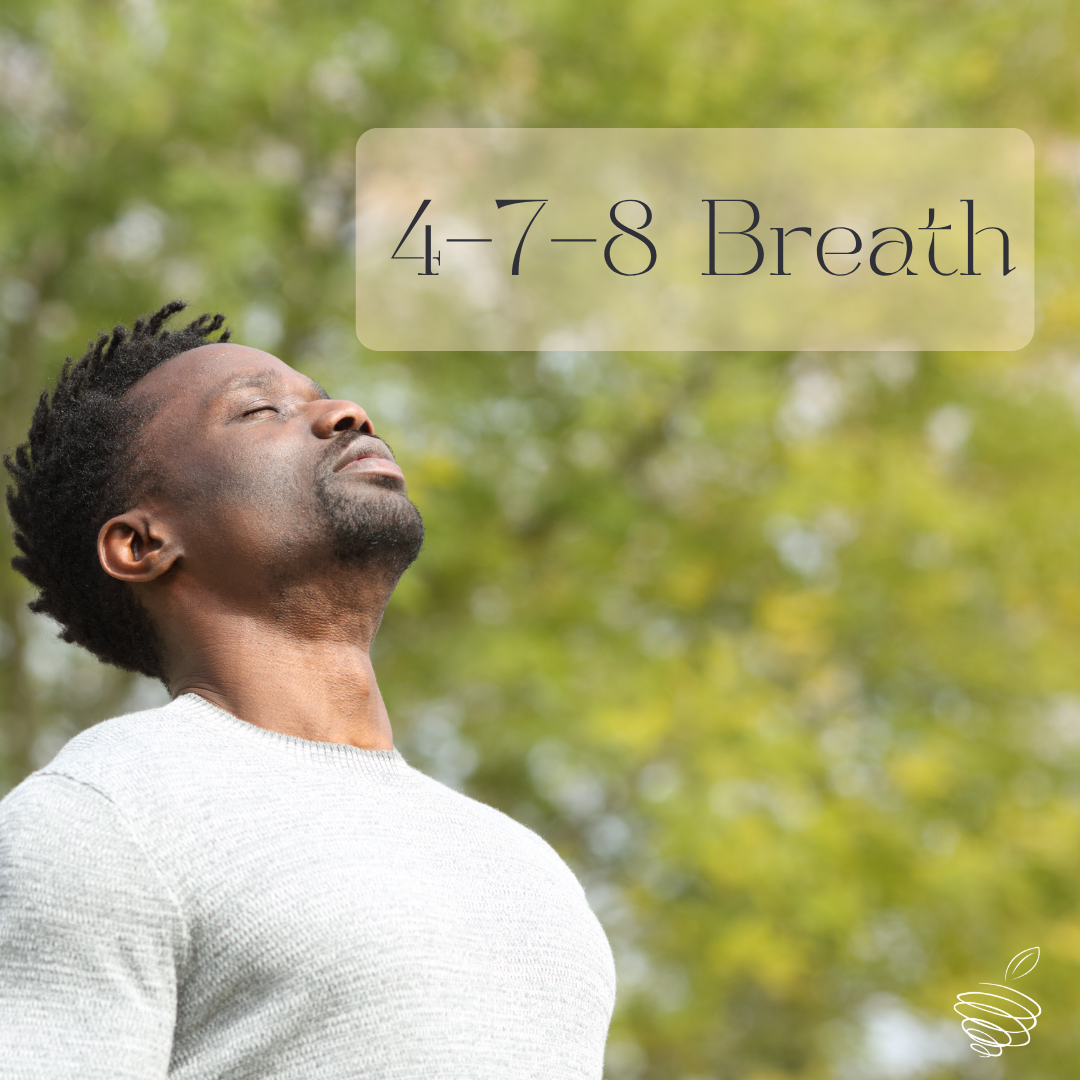
Sometimes, the simplest way to reconnect with ourselves is to pause and take a breath.
In the busyness of everyday life, we can find ourselves moving from one thing to the next, carrying tension in our bodies, racing thoughts in our minds, and the weight of everything we feel we need to figure out.
But our breath offers us something beautiful: an opportunity to slow down, return to the present moment, and create a little more space within.
This month we are exploring Trusting the Mystery and the yogic practice of Ishvara Pranidhana (Surrender), we're introducing the 4-7-8 Breath, a simple breathing technique that invites us to soften, settle, and let go.
What Is the 4-7-8 Breath?
The 4-7-8 breath is a rhythmic breathing technique that involves inhaling for four counts, holding the breath for seven counts, and exhaling slowly for eight counts.
The practice encourages us to slow our breathing and focus our attention, which may help us feel calmer and more relaxed.
The extended exhale can be particularly soothing, offering a moment to release tension and transition from the demands of the day into a quieter state of being.
And perhaps one of the most beautiful parts of this practice is its simplicity.
You don't need special equipment, a yoga mat, or even a quiet room.
Just a few moments and your breath.
How to Practice the 4-7-8 Breath
Find a comfortable seated or resting position. Allow your shoulders to soften, relax your jaw, and settle into the support beneath you.
When you're ready:
1. Inhale for 4 counts.
Breathe gently through your nose, allowing your lungs to fill without forcing the breath.
2. Hold for 7 counts.
Pause comfortably, noticing the stillness between your inhale and exhale.
3. Exhale for 8 counts.
Slowly release your breath through your mouth, allowing the exhale to be gentle and unhurried.
This completes one round.
Begin with up to four rounds, taking a break whenever needed. The breath should feel comfortable rather than strained.
If the counts feel too long, try a shorter pattern while maintaining a similar rhythm, or simply return to natural breathing. Avoid forcing the breath or pushing through dizziness or discomfort. If you have a respiratory or cardiovascular condition, check with your healthcare professional before practicing breath retention.
Remember, there is no prize for holding your breath longer.
The intention is to create ease, not another thing to accomplish.
The Beauty of the Exhale
We often think about breathing as taking something in.
A deep inhale. A fresh start. A new beginning.
But the exhale has its own quiet wisdom.
It reminds us that receiving and releasing are both necessary parts of life.
We cannot continue inhaling without eventually letting go.
And perhaps this is where our breath connects so beautifully to October's theme of surrender.
Ishvara Pranidhana invites us to recognize that while we can show up with intention and effort, we cannot control every outcome.
Much like the changing leaves, we can learn to release what we're holding and make space for whatever comes next.
With each slow exhale, imagine softening your grip on something you've been carrying.
Not because it doesn't matter.
Not because you've given up.
But because you deserve moments when you don't have to hold everything so tightly.
When to Practice?
The 4-7-8 breath can become a simple ritual woven into your everyday life.
Try it:
Before bed, as you begin to settle into rest.
During a stressful day when you need a moment to pause.
Before meditation or your yoga practice.
When transitioning from work to home.
Anytime you want to reconnect with the present moment.
You may find that some days this breathing pattern feels supportive, while other days a natural, unstructured breath is exactly what you need.
Both are welcome.
The goal isn't to breathe perfectly. It's to become more aware of what supports you.
As the leaves change and the world around us settles into a new rhythm, may we give ourselves permission to do the same.
To slow down.
To release what we can.
To make space for what we cannot yet see.
And to remember that we don't need to have everything figured out in this moment.
